
My Story
Credentials & Background
NCI Level 1 Certified Nutrition Coach
Therapeutic Recreation Degree, Brock University
CrossFit Level 1 & 2 Trainer
Volunteer On-Call Firefighter (2015–present)
Credentials & Background
NCI Level 1 Certified Nutrition Coach
Therapeutic Recreation Degree, Brock University
CrossFit Level 1 & 2 Trainer
Volunteer On-Call Firefighter (2015–present)
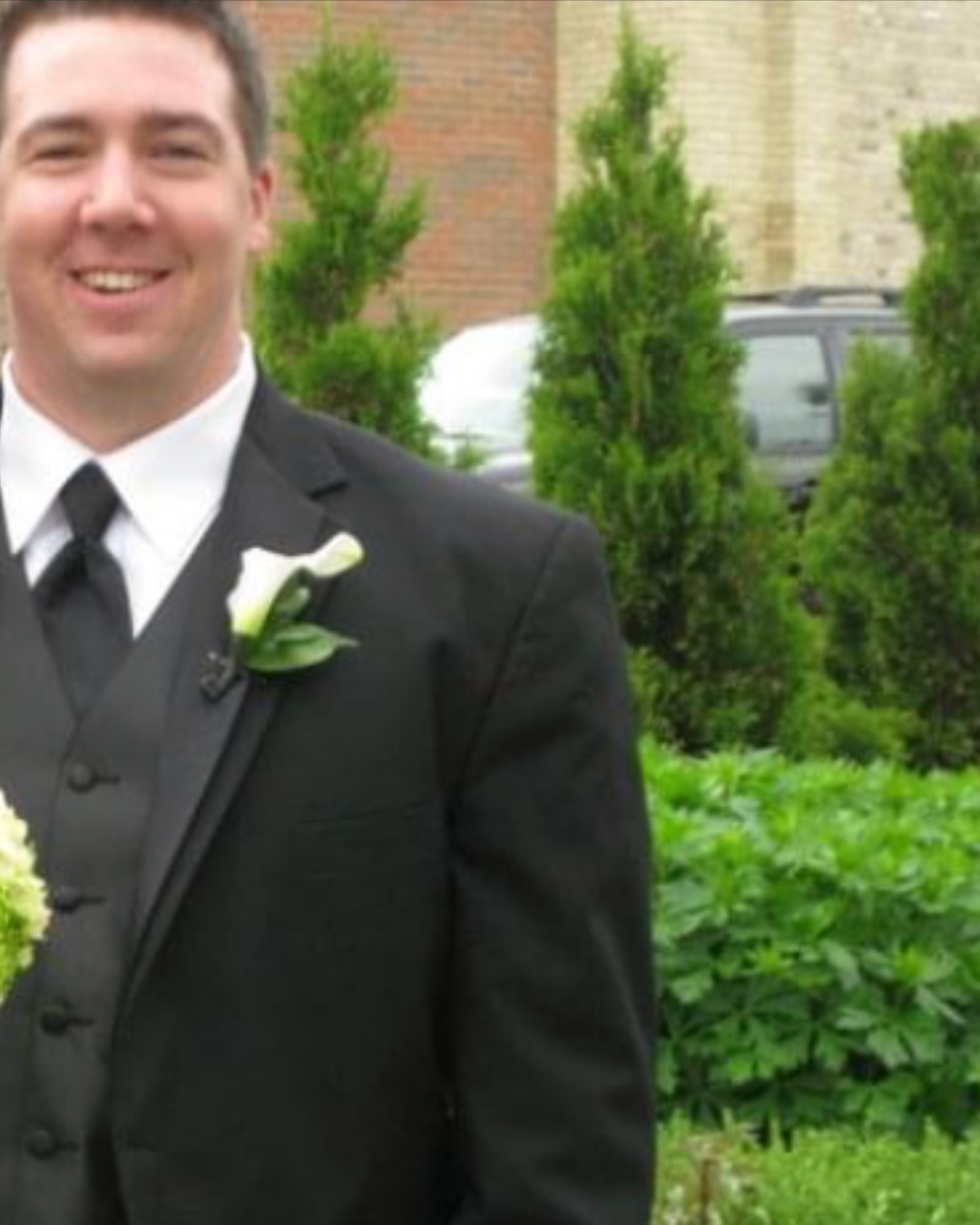
I stepped on the scale the day after my sister's wedding and saw 218lbs staring back at me.
I was 22 years old. I stood there for a second — actually shocked. Not the kind of shocked where you knew it was coming. The kind where the number hits you before your brain catches up.
That was May 2011. And it changed everything.
But let me back up.
I grew up in a small town, Walkerton, Ontario. Population 5,000. Hockey in the winter, baseball in the summer, road hockey in between. I was just a kid who loved to move and play sports — never thought twice about food, never thought twice about his body. Mom put supper on the table, we ate it. Simple.
Then university happened.
Foot-long subs with two cookies and a chocolate milk. Large chocolate milk and a double chocolate muffin for breakfast. Six donuts from Tim Hortons, eaten over two days like that was normal. Drinking until I blacked out on weekends because that's just what you did. I gained 32 lbs my first year without even noticing — and never really lost it. Three years of that life, and by the time I finished third year I was sitting at 218 lbs."
And then I stepped on that scale.
The years after that weren't pretty either.
I told myself I need to lose weight. I need to start working out and eating healthier. And I did — sort of. I'd get to the gym for a few weeks, then disappear for months. I ran at night so nobody would see me trying. I tried cutting out the ice cream, cookies and switching to chicken, broccoli and rice only to start craving everything I cut out–I could hold off for a day or two, but after constantly thinking about it, I found myself back at Dairy Queen. I was embarrassed — embarrassed to be so big, embarrassed to be working on it, embarrassed that I couldn't seem to make it stick.
I always wanted to feel like an athlete. That desire was always there. I just couldn't find the consistency to back it up.
I became a volunteer fire fighter in 2015. On the outside, things looked like they were coming together. But my eating was still a mess, my training was still all-or-nothing, and I was running myself into the ground without knowing it.
Then fall 2016 — something clicked. Day after Labor Day, I walked back into the gym and didn't stop. Max effort everything. PR everything. Train like an athlete, push like there's no tomorrow. By 2018 I was coaching at a CrossFit gym — living and breathing the performance world."
Except there's always a tomorrow. And eventually, tomorrow catches up.
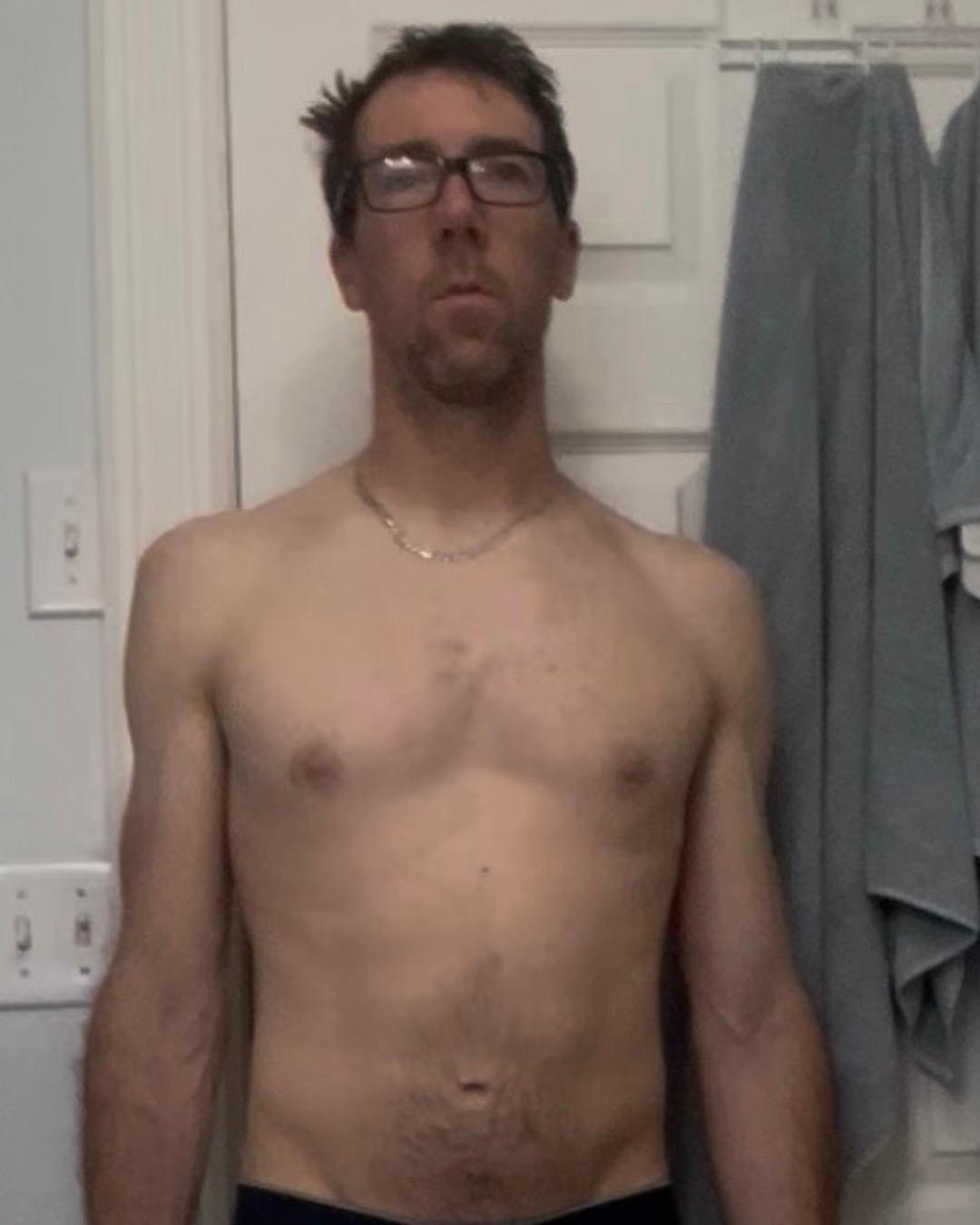
From 2011 to 2019, I went from 218 lbs to under 160 — and people started to worry. It didn't happen overnight. It was years of slowly tightening the rules without realizing it.
I didn't see it at the time. I thought I was winning. The scale was going down, I was training hard, I was dialling everything in. But the rules were tightening without me realizing it. Foods I used to enjoy became foods I had to earn. If I ate pizza, dessert, a holiday meal or something "off plan" I felt the need to work it off. The scale going up — even slightly — sent me into a spiral and wondering if was getting fat again.
I was on the edge of an eating disorder, but I didn't even know it. I just knew something felt wrong, even when the mirror said otherwise. I was lean and could see my abs, but I was always moody, exhausted and thinking about the next time I could eat.
I caught it myself. Pulled myself back. Started learning what fueling for performance actually meant instead of just restricting for a number.
In 2019 I took my nutrition coaching certification. And for the first time, everything started to make sense. Food wasn't the enemy. It was the tool I'd been fighting against instead of using. I started eating to support my training, build muscle, stay lean — and actually enjoy my life at the same time. Energy came back. Performance went up. And I could have a beer with friends or sit down to a family dinner without the guilt spiral that used to follow.
That June, sitting on my deck listening to a podcast, I decided: I want to help other people find this. I became a nutrition coach.
Then I went through it all over again.
A few years into coaching — while I was helping clients rebuild their relationship with food and lose weight— I started working with a nutrition coach myself. We went into a fat loss phase. And every single pattern I thought I'd left behind came crawling back.
The perfectionism. The restriction. The anxiety when the scale didn't move the way I expected. The feeling that I had to be perfect with every meal or I was failing. I was already a coach. I already knew better. And I still fell back into it. “Not my coach's fault, mine–I didn’t say anything” because I thought I was fine.
I had to rebuild my relationship with food a second time. Alone. No coach. Just me, figuring it out again from the inside.
That's not a failure I'm ashamed of. It's one of the most important things I've ever done — because now I understand something most coaches don't:
Knowing the information isn't enough. You have to become the person who lives it.
Here's where I am now.
I'm up at 3:45am most mornings. I run three days a week and train strength two days a week and take rest days as I need. I eat intentionally, not obsessively. I have a son who needs me present, a wife I want to show up for, clients who need my best, a business I'm building, and a fire department pager that can go off at 1am and still expects me to perform the next day.
I'm not coaching from a completely solved past. I'm coaching from inside the same life my clients are living.
I'm a first responder who's still living in the athletic body I'm trying to build — adjusting on the fly, connecting the dots in real time, and executing daily even when life makes it hard. Especially when life makes it hard.
That's not a marketing line. That's Tuesday morning.
This is who I built OPTML PRFMNCE for.
The burnt out athlete who's training hard and trying to eat right — but unknowingly underfueling. Who's running on broken sleep and wondering why they're always exhausted, always pushing, and never quite getting there. Who wants to build muscle, stay lean, and actually look like they work out — their body matching their effort for once. Who wants to perform their best and still have enough left over to enjoy their life. The casual beers with friends. The family dinners. The favourite foods — without the guilt spiral after.
That person isn't lazy. They're not undisciplined. They just don't have the full picture yet.
I do. Because I've been exactly where they are — twice.
If that sounds like you, I'd like to help.
I work with burnt out athletes 1-on-1 to build the body, the performance, and the identity of the person they're working to become — through nutrition, recovery, sleep, and the daily execution that actually makes it stick long term.
Not a quick fix. Not a perfect plan. A real system, built around your real life.
I stepped on the scale the day after my sister's wedding and saw 218lbs staring back at me.
I was 22 years old. I stood there for a second — actually shocked. Not the kind of shocked where you knew it was coming. The kind where the number hits you before your brain catches up.
That was May 2011. And it changed everything.
But let me back up.
I grew up in a small town, Walkerton, Ontario. Population 5,000. Hockey in the winter, baseball in the summer, road hockey in between. I was just a kid who loved to move and play sports — never thought twice about food, never thought twice about his body. Mom put supper on the table, we ate it. Simple.
Then university happened.
Foot-long subs with two cookies and a chocolate milk. Large chocolate milk and a double chocolate muffin for breakfast. Six donuts from Tim Hortons, eaten over two days like that was normal. Drinking until I blacked out on weekends because that's just what you did. I gained 32 lbs my first year without even noticing — and never really lost it. Three years of that life, and by the time I finished third year I was sitting at 218 lbs."
And then I stepped on that scale.
The years after that weren't pretty either.
I told myself I need to lose weight. I need to start working out and eating healthier. And I did — sort of. I'd get to the gym for a few weeks, then disappear for months. I ran at night so nobody would see me trying. I tried cutting out the ice cream, cookies and switching to chicken, broccoli and rice only to start craving everything I cut out–I could hold off for a day or two, but after constantly thinking about it, I found myself back at Dairy Queen. I was embarrassed — embarrassed to be so big, embarrassed to be working on it, embarrassed that I couldn't seem to make it stick.
I always wanted to feel like an athlete. That desire was always there. I just couldn't find the consistency to back it up.
I became a volunteer fire fighter in 2015. On the outside, things looked like they were coming together. But my eating was still a mess, my training was still all-or-nothing, and I was running myself into the ground without knowing it.
Then fall 2016 — something clicked. Day after Labor Day, I walked back into the gym and didn't stop. Max effort everything. PR everything. Train like an athlete, push like there's no tomorrow. By 2018 I was coaching at a CrossFit gym — living and breathing the performance world."
Except there's always a tomorrow. And eventually, tomorrow catches up.
From 2011 to 2019, I went from 218 lbs to under 160 — and people started to worry. It didn't happen overnight. It was years of slowly tightening the rules without realizing it.
I didn't see it at the time. I thought I was winning. The scale was going down, I was training hard, I was dialling everything in. But the rules were tightening without me realizing it. Foods I used to enjoy became foods I had to earn. If I ate pizza, dessert, a holiday meal or something "off plan" I felt the need to work it off. The scale going up — even slightly — sent me into a spiral and wondering if was getting fat again.
I was on the edge of an eating disorder, but I didn't even know it. I just knew something felt wrong, even when the mirror said otherwise. I was lean and could see my abs, but I was always moody, exhausted and thinking about the next time I could eat.
I caught it myself. Pulled myself back. Started learning what fueling for performance actually meant instead of just restricting for a number.
In 2019 I took my nutrition coaching certification. And for the first time, everything started to make sense. Food wasn't the enemy. It was the tool I'd been fighting against instead of using. I started eating to support my training, build muscle, stay lean — and actually enjoy my life at the same time. Energy came back. Performance went up. And I could have a beer with friends or sit down to a family dinner without the guilt spiral that used to follow.
That June, sitting on my deck listening to a podcast, I decided: I want to help other people find this. I became a nutrition coach.
Then I went through it all over again.
A few years into coaching — while I was helping clients rebuild their relationship with food and lose weight— I started working with a nutrition coach myself. We went into a fat loss phase. And every single pattern I thought I'd left behind came crawling back.
The perfectionism. The restriction. The anxiety when the scale didn't move the way I expected. The feeling that I had to be perfect with every meal or I was failing. I was already a coach. I already knew better. And I still fell back into it. “Not my coach's fault, mine–I didn’t say anything” because I thought I was fine.
I had to rebuild my relationship with food a second time. Alone. No coach. Just me, figuring it out again from the inside.
That's not a failure I'm ashamed of. It's one of the most important things I've ever done — because now I understand something most coaches don't:
Knowing the information isn't enough. You have to become the person who lives it.
Here's where I am now.
I'm up at 3:45am most mornings. I run three days a week and train strength two days a week and take rest days as I need. I eat intentionally, not obsessively. I have a son who needs me present, a wife I want to show up for, clients who need my best, a business I'm building, and a fire department pager that can go off at 1am and still expects me to perform the next day.
I'm not coaching from a completely solved past. I'm coaching from inside the same life my clients are living.
I'm a first responder who's still living in the athletic body I'm trying to build — adjusting on the fly, connecting the dots in real time, and executing daily even when life makes it hard. Especially when life makes it hard.
That's not a marketing line. That's Tuesday morning.
This is who I built OPTML PRFMNCE for.
The burnt out athlete who's training hard and trying to eat right — but unknowingly underfueling. Who's running on broken sleep and wondering why they're always exhausted, always pushing, and never quite getting there. Who wants to build muscle, stay lean, and actually look like they work out — their body matching their effort for once. Who wants to perform their best and still have enough left over to enjoy their life. The casual beers with friends. The family dinners. The favourite foods — without the guilt spiral after.
That person isn't lazy. They're not undisciplined. They just don't have the full picture yet.
I do. Because I've been exactly where they are — twice.
If that sounds like you, I'd like to help.
I work with burnt out athletes 1-on-1 to build the body, the performance, and the identity of the person they're working to become — through nutrition, recovery, sleep, and the daily execution that actually makes it stick long term.
Not a quick fix. Not a perfect plan. A real system, built around your real life.